Veterans Stories - Veterans of every generation find their stride in adaptive sports
May 6, 2026

Veterans of every generation find their stride in adaptive sports

Posted By: Connie Powell
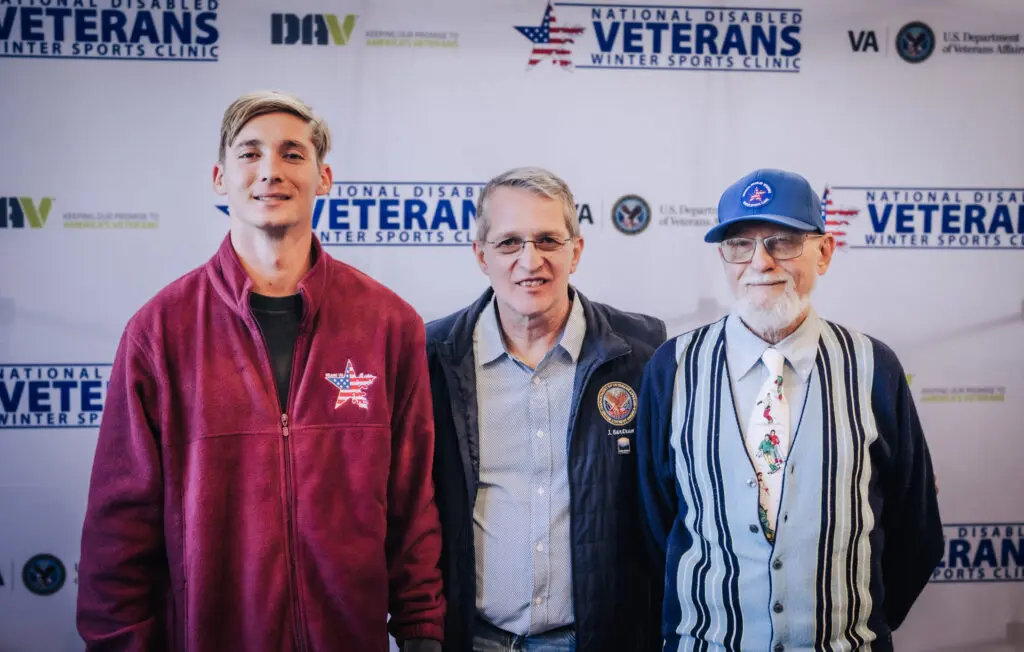
During his visit to Snowmass, Colorado, the VA Under Secretary of Health, John J. Bartrum, met with Veterans participating at the 40th Winter Sports Clinic from April 4 – 11, 2026. Phillip Wotton, 26 (left), a U.S. Coast Guard Veteran, and Harold Brown, 84 (right) were the youngest and oldest participants at the clinic this year.

At the National Disabled Veterans Winter Sports Clinic, there’s no single profile of a participant.

Veterans arrive from different branches, eras, and life experiences. Some are just beginning to navigate a new reality after injury. Others have spent decades adapting. But on the slopes, those differences fade, replaced by a shared pursuit of movement, independence, and community.

Two Veterans, one 23, the other 84, show that while their personal adaptive sports experiences that brought them to the Winter Sports Clinic differ, they ultimately lead to the same place: healing.

Harold Eugene Brown, 84 — U.S. Navy (Vietnam-era)

Drafted during the Vietnam War era, Harold Eugene Brown carries decades of experience living with reduced vision.

While age has changed how he is able to see the world, his mindset remains steady.

Through adaptive sports and the health care he receives at the Lebanon VA Medical Center in Pennsylvania, he stays healthy and finds connection with a community he loves.

“Get out there, get involved,” Brown offered as advice to fellow Veterans. “Once you’re involved, you won’t want to get away.”

During his second year at the Winter Sports Clinic, Brown shows no signs of slowing down. Later this year, he plans to compete in the National Veterans Golden Age Games, continuing to prove that age and ability do not define limits.  

Phillip Wotton, 23 — U.S. Coast Guard

Phillip Wotton’s journey to adaptive sports looks very different, but the determination feels familiar.

A lifelong athlete who loves surfing, volleyball, and the outdoors, Wotton’s life changed after a diving accident in 2024 left him paralyzed. After a year and a half of recovery, his care team at the Miami VA Medical Center introduced him to the Winter Sports Clinic.

Now, he’s discovering what’s still possible.

“I didn’t know how good the technology was for people to do adaptive stuff until now,” he said. “This shows I can do more recreational activities.”

In his first year at the Winter Sports Clinic, Wotton is already redefining what progress looks like. Next year, whether standing or using a sit-ski, Wotton looks forward to returning to the clinic.

A shared message across generations

Despite nearly six decades between Brown and Wotton, both Veterans arrive at the same conclusion: staying engaged is everything.

“Whatever sport you ever did in your life, go back and practice,” Brown said.

That message is echoed by the nearly 320 Veteran participants at the 40th National Disabled Veterans Winter Sports Clinic where recovery is not a finish line – it’s ongoing.

Looking ahead

Programs like the Winter Sports Clinic reflect VA’s broader efforts to expand access to adaptive sports and recreation.

During his visit to Snowmass, Colorado, the VA Under Secretary for Health, John J. Bartrum, met with Veterans participating in fly fishing, Nordic and Alpine skiing, sled hocking, and other adaptive sports events, reinforcing VA’s commitment to supporting recovery through adaptive sports.

“Adaptive sports are the culmination of physical, mental and spiritual health, which are essential for not only healing – but thriving.” Bartrum said. “I am committed to not only continue to support this event but find ways to improve and expand opportunities across our adaptive sports program.”

Those words carry weight.

VA recently committed $16 million dollars to adaptive sports programming, expanding access and connecting more Veterans with opportunities like the Winter Sports Clinic. Investments like these ensure every Veteran, regardless of age or ability, have the opportunity to rediscover what they’re capable of.

The National Disabled Veterans Winter Sports Clinic is the world leader in rehabilitation for profoundly disabled Veterans from across the country. Veterans with TBIs, spinal cord injuries, visual impairments, amputations, multiple sclerosis, and other severe disabilities are challenged to overcome perceived limitations through adaptive skiing, sled hockey, scuba diving, rock wall climbing, education and other activities. It is the largest rehabilitative event of its kind in the world.

Veterans interested in participating in 2027 can review qualifications and applications at wintersportsclinic.org.
    Veterans Stories - From Special Operations to Adaptive Sports: A Night Stalker’s New Mission

    From Special Operations to Adaptive Sports: A Night Stalker’s New Mission

    Posted By: Connie Powell
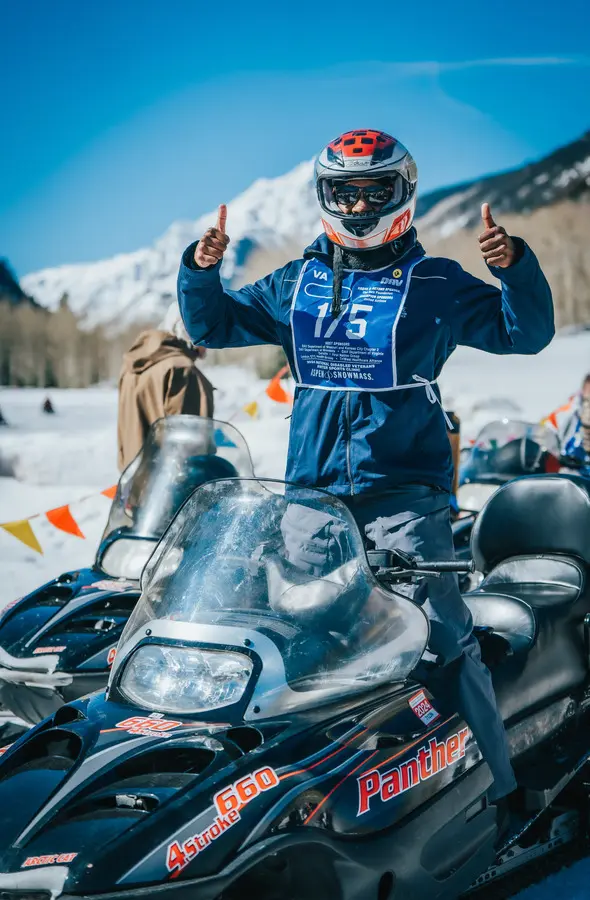
    U.S. Army Veteran Clarence Davis smiles during the National Disabled Veterans Winter Sports Clinic. In 2022, Davis was introduced to adaptive sports through the Washington, D.C. VA Medical Center.

    SNOWMASS, CO. – For retired U.S. Army Command Sgt. Maj. Clarence Davis, life in the 160th Special Operations Aviation Regiment (Airborne) was defined by precision, pressure, and pride.

    Stationed at Fort Campbell, Kentucky with 1st Battalion, Davis served as an armament specialist on MH-60 Direct Action Penetrator (DAP) Black Hawks. He maintained and operated weapons systems on helicopters supporting some of the military’s most elite and secret missions.

    “You volunteer for it. You assess. Not everyone makes it,” Davis said. “So, when you do, that’s something you carry forever.”

    His career included 13 combat deployments and assignments in the Army’s premier Special Operations aviation unit. He rose in ranks from a Private to a Command Sgt. Major. His identity was deeply tied to the uniform.

    Until it wasn’t.

    While preparing for his 14th combat tour, Davis’ career came to an abrupt halt when medical officers determined he needed multiple surgeries, forcing an abrupt end to his career.

    “I thought I let everyone down,” he said. “Everything I worked for, it just stopped. My identity was ripped from me.”

    Like many Veterans leaving high-performing units, Davis faced more than a career transition – he faced a loss of identity.

    He also was forced to step away from the physical activities that once defined him.

    “I couldn’t do the things I loved anymore,” he said. “Fishing, basketball, football – running, now that was my baby.”

    For a time, he felt lost and isolated.

    “I was a loner,” he recalled.

    That began to change in 2022, when staff from the Washington, D.C. VA Medical Center introduced him to adaptive sports.

    At first, he resisted.

    “If I couldn’t run, I didn’t want to do anything else,” he said.

    But then his care team encouraged him to try an adaptive bike.

    “I tried it, and I fell in love with it,” Davis said.

    That single decision became a turning point. Since then, Davis has explored a range of adaptive sports from cycling and sled hockey to rock climbing and pickleball. What started as a physical outlet became something more.

    “It’s therapeutic,” he said. “In every way.”

    Finding the Team Again

    What surprised him most wasn’t the sports — it was the people.

    “You get around other Veterans, and something just clicks,” Davis said. “You share stories, you push each other. That camaraderie is still there.”

    Through programs like the National Disabled Veterans Winter Sports Clinic, Davis found a community that felt familiar in a different way. The clinic, sponsored by VA and DAV, hosted each year in Snowmass, Co. For over 40 years, the clinic has allowed profoundly disabled Veterans to participate in adaptive Alpine and Nordic skiing, sled hockey, scuba diving and a number of other adaptive activities, sports, and education.

    Davis found the event focused less on rank or role, and more about shared experience and forward movement.

    “Coming to these clinics, you meet Veterans much older and younger than you,” he said.

    “You’re getting different perspectives and that diversity is important.”

    Today, Davis has rebuilt his sense of purpose.  He’s a certified personal trainer, an avid pickleball player, and a mentor to other Veterans navigating life after service.

    “I’m a totally different person now,” he said. “I’m still leading, just in a different way.”

    Veterans Stories - Adaptive Sports, Unbreakable Bonds

    Adaptive Sports, Unbreakable Bonds

    Posted By: Connie Powell
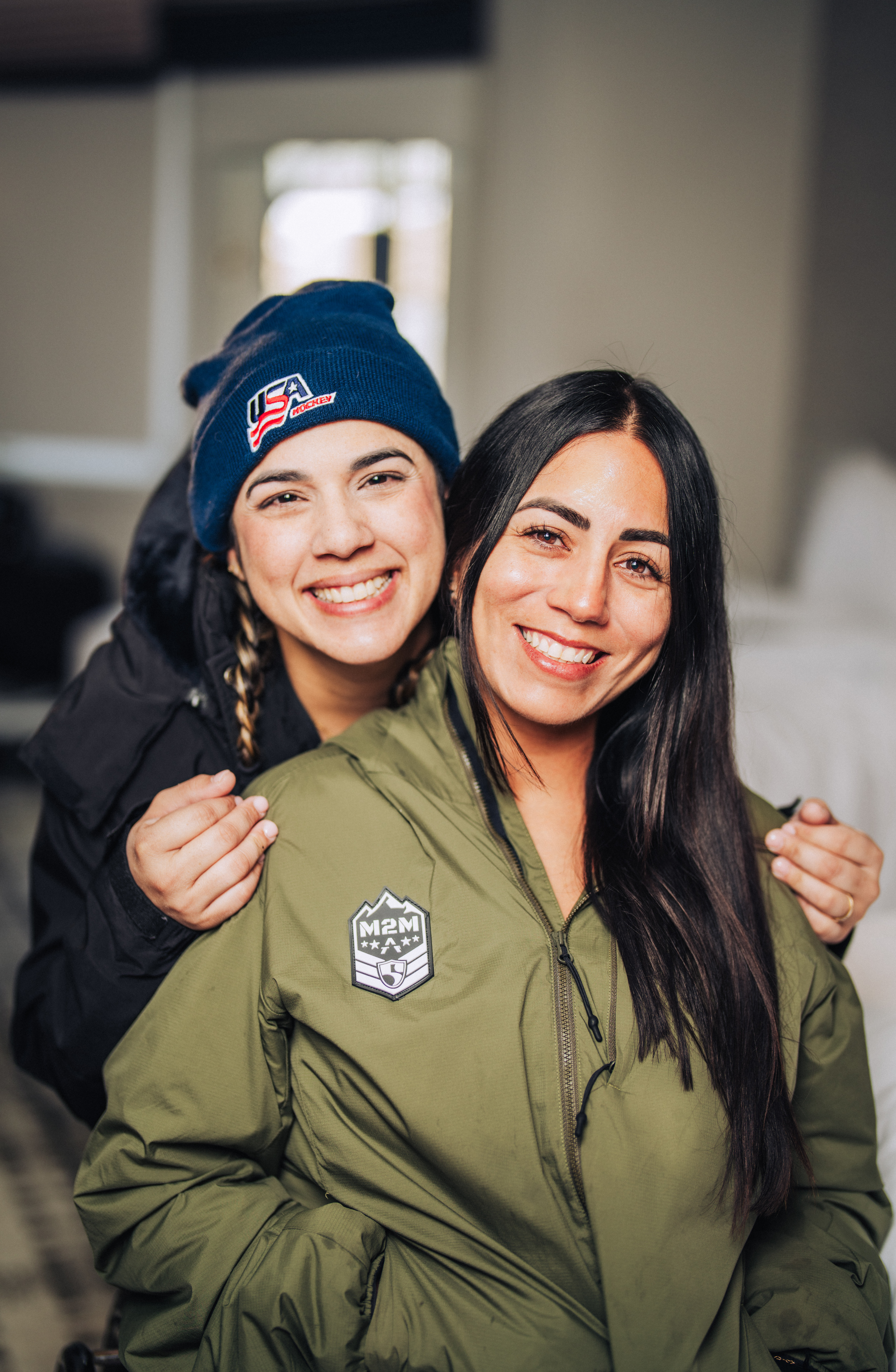
    A chance encounter at their physical therapy appointments at the San Juan VA Medical Center in Puerto Rico ignited a friendship between an unlikely duo. Keyla Agosto (left) and Eva DeJesus Collazo (right) attended the 40th National Disabled Veterans Winter Sports Clinic where they are also roommates.

      The friendship between Keyla Agosto and Eva DeJesus Collazo didn’t make sense on paper.

      Agosta is loud, expressive, likes the color pink, and is quick to say “yes” to everything. DeJesus Collazo is quieter, more reserved, prefers the color black, and is deliberate. Agosta loves glitter and team sports. DeJesus Collazo enjoys calmness and individual competitions.

      When they first met through the San Juan VA Medical Center in Puerto Rico three years ago, even they noticed the contrast.

      “Agosta talks way too much,” DeJesus Collazo said, laughing.

      “I talk a lot,” Agosta agreed, also giggling. “We are just super different.”

      But what started as difference turned into something deeper.

      Collective resilience

      The two met while navigating life after separate, life-changing diagnoses. Agosta, an Army Veteran, was diagnosed with multiple sclerosis (MS). DeJesus Collazo, an Air Force Veteran, sustained a spinal cord injury after a car accident four years ago that left her paralyzed.

      Both arrived at that chapter of life differently.

      For Agosta, her MS diagnosis brought a period of deep depression.

      “I didn’t want to get out of bed,” she said. “My life just stopped.”

      Everything shifted when she attended the National Veterans Wheelchair Games. Surrounded by other Veterans with disabilities competing and laughing, something clicked.

      “My life has changed, I cannot argue about that,” Agosta said.

      DeJesus Collazo’s journey came with a different kind of clarity. After waking from a nine-day coma following her accident, she understood quickly what had happened. The harder part came later: acceptance.

      “It got tougher months later, when you realize this is forever,” she said.

      But she also found something unexpected in that loss.

      “Since the accident, I’m a better person,” DeJesus Collazo said. “And more important, I’ve met better people.”

      One of those people was Agosta.

      From rehabilitation partners to twin flames

      Over time, their friendship grew from chance introduction to daily routine — morning video calls, shared holidays, traveling together, and constant support. Despite their differences, they found alignment in how they approached life moving forward.

      “We’re like a puzzle,” Agosta said. “We’re different, but we complement each other.”

      That dynamic shows up everywhere.

      Agosta pushes DeJesus Collazo to try more. More sports. More experiences. More socializing.

      DeJesus Collazo grounds Agosta with a steadier, more direct perspective.

      They show up for each other, even when it’s uncomfortable.

      “She doesn’t do well with heat because of her diagnosis,” DeJesus Collazo said. “But she still shows up for me.”

      Agosta returns the same energy, pulling DeJesus Collazo into activities she might otherwise avoid.

      “I don’t like basketball, but here I am going to her basketball tournament,” DeJesus Collazo said while rolling her eyes, jokingly.

      Connecting to Veteran wellness communities

      Together, they’ve built a life that looks nothing like what either imagined after their diagnoses. Between adaptive sports, travel, school, and advocacy, both women stay busy.

      And they’ve become a source of momentum not just for each other, but for other Veterans.

      At events like the 40th National Disabled Veterans Winter Sports Clinic, they exchange resources, share experiences, and encourage others who may still be struggling to leave their homes or redefine what life looks like after injury or illness.

      For Agosta, that purpose is personal.

      “If you think you can’t do something, just try,” she said. “At least try.”

      DeJesus Collazo’s message is just as direct.

      “Take the chance,” she said. “There’s nothing waiting for you at home.”

      Their friendship wasn’t built on similarity. It was built on contrast, honesty, and a shared refusal to stop.

      Opposites, undeniably.

      But together, they are stronger than either would be alone.