Veterans Stories - Veterans of every generation find their stride in adaptive sports
May 6, 2026

Veterans of every generation find their stride in adaptive sports

Posted By: Connie Powell
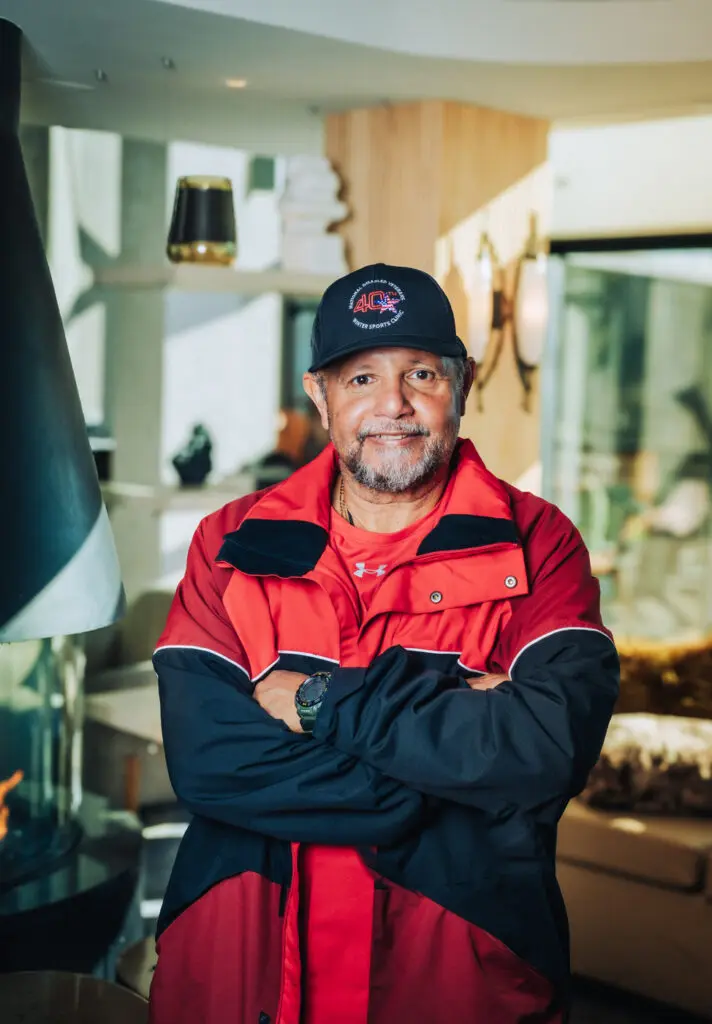
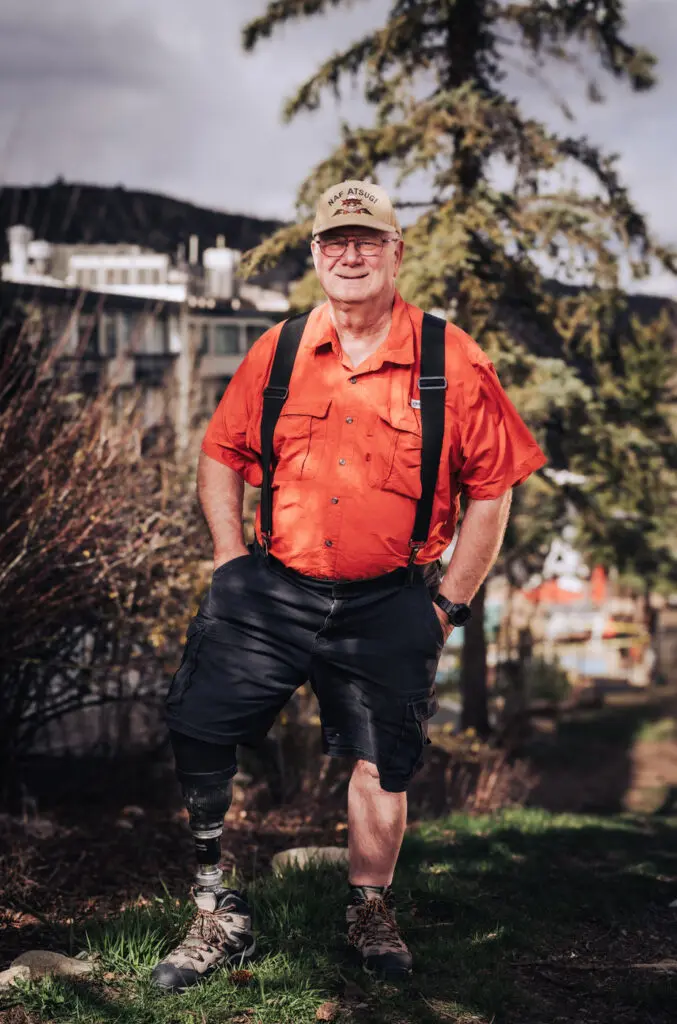
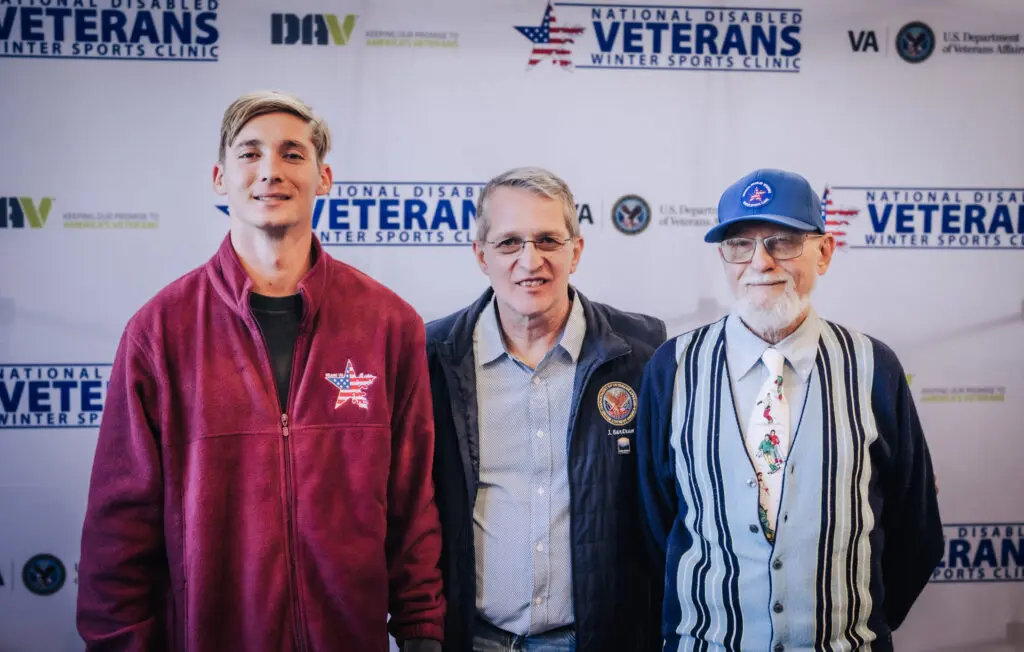
During his visit to Snowmass, Colorado, the VA Under Secretary of Health, John J. Bartrum, met with Veterans participating at the 40th Winter Sports Clinic from April 4 – 11, 2026. Phillip Wotton, 26 (left), a U.S. Coast Guard Veteran, and Harold Brown, 84 (right) were the youngest and oldest participants at the clinic this year.

At the National Disabled Veterans Winter Sports Clinic, there’s no single profile of a participant.

Veterans arrive from different branches, eras, and life experiences. Some are just beginning to navigate a new reality after injury. Others have spent decades adapting. But on the slopes, those differences fade, replaced by a shared pursuit of movement, independence, and community.

Two Veterans, one 23, the other 84, show that while their personal adaptive sports experiences that brought them to the Winter Sports Clinic differ, they ultimately lead to the same place: healing.

Harold Eugene Brown, 84 — U.S. Navy (Vietnam-era)

Drafted during the Vietnam War era, Harold Eugene Brown carries decades of experience living with reduced vision.

While age has changed how he is able to see the world, his mindset remains steady.

Through adaptive sports and the health care he receives at the Lebanon VA Medical Center in Pennsylvania, he stays healthy and finds connection with a community he loves.

“Get out there, get involved,” Brown offered as advice to fellow Veterans. “Once you’re involved, you won’t want to get away.”

During his second year at the Winter Sports Clinic, Brown shows no signs of slowing down. Later this year, he plans to compete in the National Veterans Golden Age Games, continuing to prove that age and ability do not define limits.  

Phillip Wotton, 23 — U.S. Coast Guard

Phillip Wotton’s journey to adaptive sports looks very different, but the determination feels familiar.

A lifelong athlete who loves surfing, volleyball, and the outdoors, Wotton’s life changed after a diving accident in 2024 left him paralyzed. After a year and a half of recovery, his care team at the Miami VA Medical Center introduced him to the Winter Sports Clinic.

Now, he’s discovering what’s still possible.

“I didn’t know how good the technology was for people to do adaptive stuff until now,” he said. “This shows I can do more recreational activities.”

In his first year at the Winter Sports Clinic, Wotton is already redefining what progress looks like. Next year, whether standing or using a sit-ski, Wotton looks forward to returning to the clinic.

A shared message across generations

Despite nearly six decades between Brown and Wotton, both Veterans arrive at the same conclusion: staying engaged is everything.

“Whatever sport you ever did in your life, go back and practice,” Brown said.

That message is echoed by the nearly 320 Veteran participants at the 40th National Disabled Veterans Winter Sports Clinic where recovery is not a finish line – it’s ongoing.

Looking ahead

Programs like the Winter Sports Clinic reflect VA’s broader efforts to expand access to adaptive sports and recreation.

During his visit to Snowmass, Colorado, the VA Under Secretary for Health, John J. Bartrum, met with Veterans participating in fly fishing, Nordic and Alpine skiing, sled hocking, and other adaptive sports events, reinforcing VA’s commitment to supporting recovery through adaptive sports.

“Adaptive sports are the culmination of physical, mental and spiritual health, which are essential for not only healing – but thriving.” Bartrum said. “I am committed to not only continue to support this event but find ways to improve and expand opportunities across our adaptive sports program.”

Those words carry weight.

VA recently committed $16 million dollars to adaptive sports programming, expanding access and connecting more Veterans with opportunities like the Winter Sports Clinic. Investments like these ensure every Veteran, regardless of age or ability, have the opportunity to rediscover what they’re capable of.

The National Disabled Veterans Winter Sports Clinic is the world leader in rehabilitation for profoundly disabled Veterans from across the country. Veterans with TBIs, spinal cord injuries, visual impairments, amputations, multiple sclerosis, and other severe disabilities are challenged to overcome perceived limitations through adaptive skiing, sled hockey, scuba diving, rock wall climbing, education and other activities. It is the largest rehabilitative event of its kind in the world.

Veterans interested in participating in 2027 can review qualifications and applications at wintersportsclinic.org.
    Veterans Stories - From Special Operations to Adaptive Sports: A Night Stalker’s New Mission

    From Special Operations to Adaptive Sports: A Night Stalker’s New Mission

    Posted By: Connie Powell
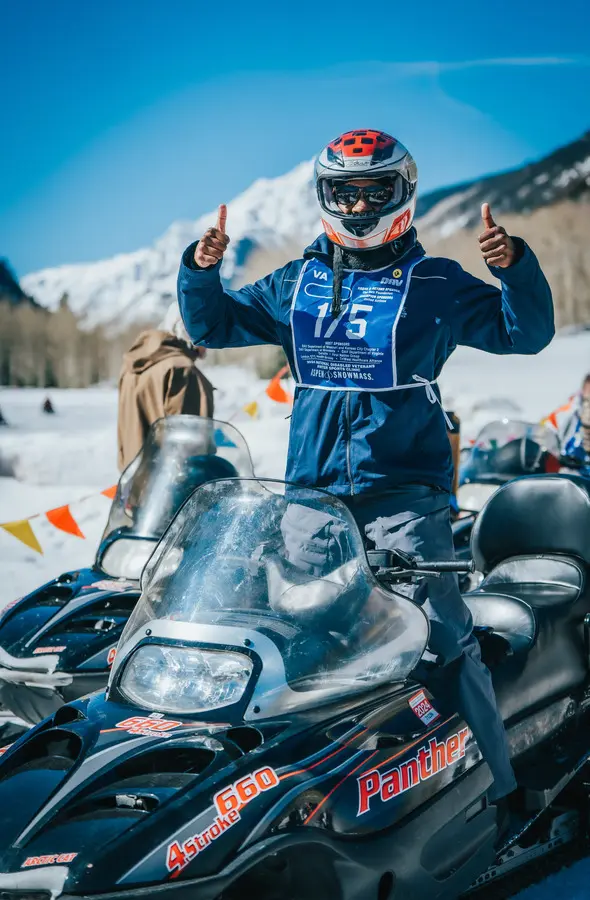
    U.S. Army Veteran Clarence Davis smiles during the National Disabled Veterans Winter Sports Clinic. In 2022, Davis was introduced to adaptive sports through the Washington, D.C. VA Medical Center.

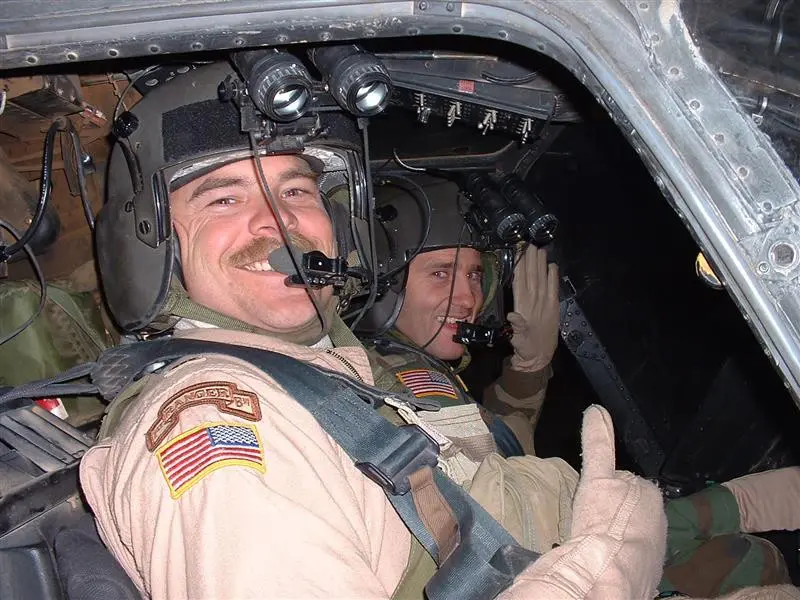
    SNOWMASS, CO. – For retired U.S. Army Command Sgt. Maj. Clarence Davis, life in the 160th Special Operations Aviation Regiment (Airborne) was defined by precision, pressure, and pride.

    Stationed at Fort Campbell, Kentucky with 1st Battalion, Davis served as an armament specialist on MH-60 Direct Action Penetrator (DAP) Black Hawks. He maintained and operated weapons systems on helicopters supporting some of the military’s most elite and secret missions.

    “You volunteer for it. You assess. Not everyone makes it,” Davis said. “So, when you do, that’s something you carry forever.”

    His career included 13 combat deployments and assignments in the Army’s premier Special Operations aviation unit. He rose in ranks from a Private to a Command Sgt. Major. His identity was deeply tied to the uniform.

    Until it wasn’t.

    While preparing for his 14th combat tour, Davis’ career came to an abrupt halt when medical officers determined he needed multiple surgeries, forcing an abrupt end to his career.

    “I thought I let everyone down,” he said. “Everything I worked for, it just stopped. My identity was ripped from me.”

    Like many Veterans leaving high-performing units, Davis faced more than a career transition – he faced a loss of identity.

    He also was forced to step away from the physical activities that once defined him.

    “I couldn’t do the things I loved anymore,” he said. “Fishing, basketball, football – running, now that was my baby.”

    For a time, he felt lost and isolated.

    “I was a loner,” he recalled.

    That began to change in 2022, when staff from the Washington, D.C. VA Medical Center introduced him to adaptive sports.

    At first, he resisted.

    “If I couldn’t run, I didn’t want to do anything else,” he said.

    But then his care team encouraged him to try an adaptive bike.

    “I tried it, and I fell in love with it,” Davis said.

    That single decision became a turning point. Since then, Davis has explored a range of adaptive sports from cycling and sled hockey to rock climbing and pickleball. What started as a physical outlet became something more.

    “It’s therapeutic,” he said. “In every way.”

    Finding the Team Again

    What surprised him most wasn’t the sports — it was the people.

    “You get around other Veterans, and something just clicks,” Davis said. “You share stories, you push each other. That camaraderie is still there.”

    Through programs like the National Disabled Veterans Winter Sports Clinic, Davis found a community that felt familiar in a different way. The clinic, sponsored by VA and DAV, hosted each year in Snowmass, Co. For over 40 years, the clinic has allowed profoundly disabled Veterans to participate in adaptive Alpine and Nordic skiing, sled hockey, scuba diving and a number of other adaptive activities, sports, and education.

    Davis found the event focused less on rank or role, and more about shared experience and forward movement.

    “Coming to these clinics, you meet Veterans much older and younger than you,” he said.

    “You’re getting different perspectives and that diversity is important.”

    Today, Davis has rebuilt his sense of purpose.  He’s a certified personal trainer, an avid pickleball player, and a mentor to other Veterans navigating life after service.

    “I’m a totally different person now,” he said. “I’m still leading, just in a different way.”

    Veterans Stories - Adaptive Sports, Unbreakable Bonds

    Adaptive Sports, Unbreakable Bonds

    Posted By: Connie Powell
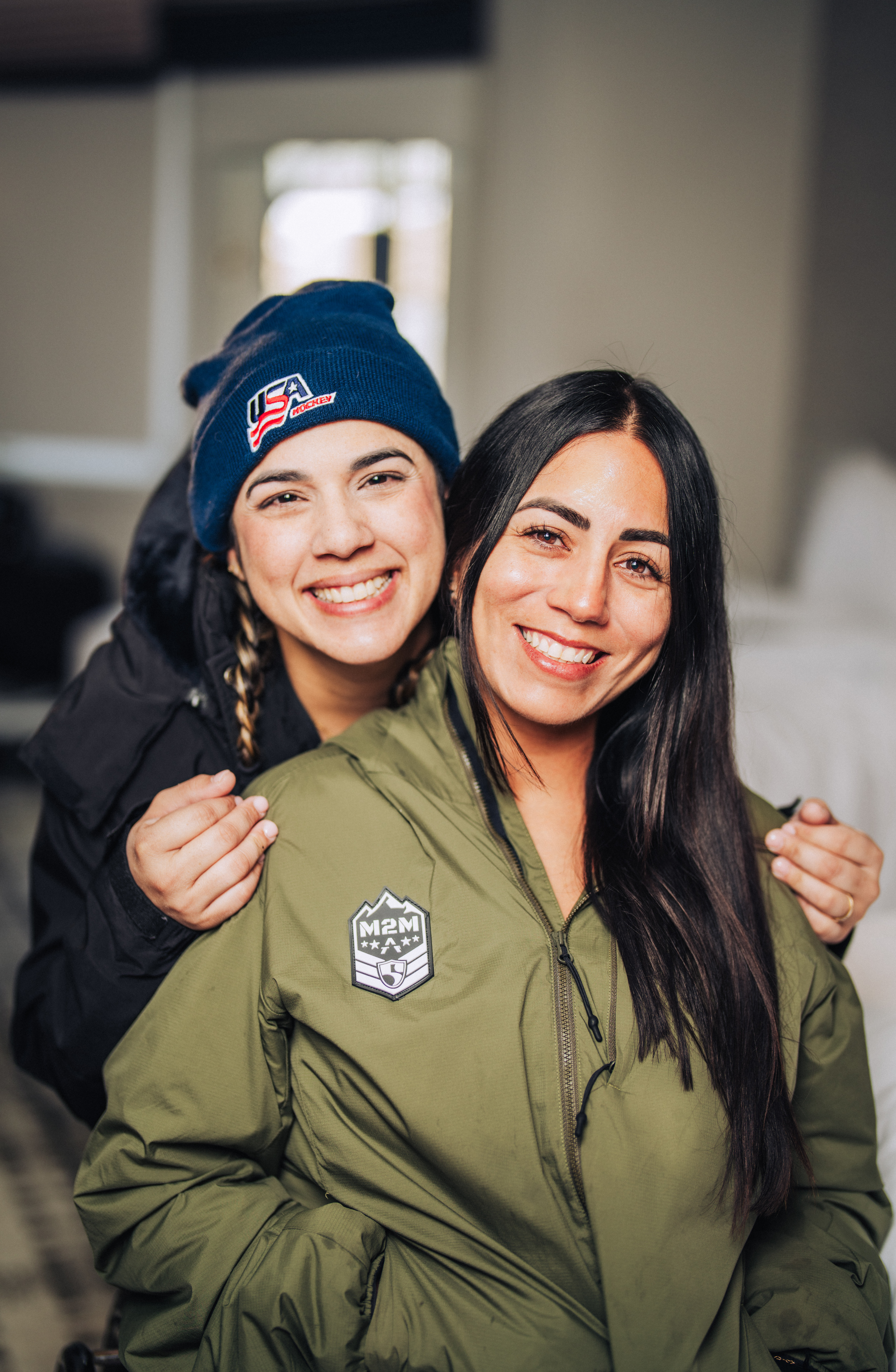
    A chance encounter at their physical therapy appointments at the San Juan VA Medical Center in Puerto Rico ignited a friendship between an unlikely duo. Keyla Agosto (left) and Eva DeJesus Collazo (right) attended the 40th National Disabled Veterans Winter Sports Clinic where they are also roommates.

      The friendship between Keyla Agosto and Eva DeJesus Collazo didn’t make sense on paper.

      Agosta is loud, expressive, likes the color pink, and is quick to say “yes” to everything. DeJesus Collazo is quieter, more reserved, prefers the color black, and is deliberate. Agosta loves glitter and team sports. DeJesus Collazo enjoys calmness and individual competitions.

      When they first met through the San Juan VA Medical Center in Puerto Rico three years ago, even they noticed the contrast.

      “Agosta talks way too much,” DeJesus Collazo said, laughing.

      “I talk a lot,” Agosta agreed, also giggling. “We are just super different.”

      But what started as difference turned into something deeper.

      Collective resilience

      The two met while navigating life after separate, life-changing diagnoses. Agosta, an Army Veteran, was diagnosed with multiple sclerosis (MS). DeJesus Collazo, an Air Force Veteran, sustained a spinal cord injury after a car accident four years ago that left her paralyzed.

      Both arrived at that chapter of life differently.

      For Agosta, her MS diagnosis brought a period of deep depression.

      “I didn’t want to get out of bed,” she said. “My life just stopped.”

      Everything shifted when she attended the National Veterans Wheelchair Games. Surrounded by other Veterans with disabilities competing and laughing, something clicked.

      “My life has changed, I cannot argue about that,” Agosta said.

      DeJesus Collazo’s journey came with a different kind of clarity. After waking from a nine-day coma following her accident, she understood quickly what had happened. The harder part came later: acceptance.

      “It got tougher months later, when you realize this is forever,” she said.

      But she also found something unexpected in that loss.

      “Since the accident, I’m a better person,” DeJesus Collazo said. “And more important, I’ve met better people.”

      One of those people was Agosta.

      From rehabilitation partners to twin flames

      Over time, their friendship grew from chance introduction to daily routine — morning video calls, shared holidays, traveling together, and constant support. Despite their differences, they found alignment in how they approached life moving forward.

      “We’re like a puzzle,” Agosta said. “We’re different, but we complement each other.”

      That dynamic shows up everywhere.

      Agosta pushes DeJesus Collazo to try more. More sports. More experiences. More socializing.

      DeJesus Collazo grounds Agosta with a steadier, more direct perspective.

      They show up for each other, even when it’s uncomfortable.

      “She doesn’t do well with heat because of her diagnosis,” DeJesus Collazo said. “But she still shows up for me.”

      Agosta returns the same energy, pulling DeJesus Collazo into activities she might otherwise avoid.

      “I don’t like basketball, but here I am going to her basketball tournament,” DeJesus Collazo said while rolling her eyes, jokingly.

      Connecting to Veteran wellness communities

      Together, they’ve built a life that looks nothing like what either imagined after their diagnoses. Between adaptive sports, travel, school, and advocacy, both women stay busy.

      And they’ve become a source of momentum not just for each other, but for other Veterans.

      At events like the 40th National Disabled Veterans Winter Sports Clinic, they exchange resources, share experiences, and encourage others who may still be struggling to leave their homes or redefine what life looks like after injury or illness.

      For Agosta, that purpose is personal.

      “If you think you can’t do something, just try,” she said. “At least try.”

      DeJesus Collazo’s message is just as direct.

      “Take the chance,” she said. “There’s nothing waiting for you at home.”

      Their friendship wasn’t built on similarity. It was built on contrast, honesty, and a shared refusal to stop.

      Opposites, undeniably.

      But together, they are stronger than either would be alone.

      Veterans Stories - Shared grief brings healing on the mountain

      April 10, 2026

      Shared grief brings healing on the mountain

      Posted By: Connie Powell

      At the top of Snowmass this year, Jorge DeCastro-Cordeiro paused and looked out over the mountain. He took a deep breath and closed his eyes for a minute. He steadied himself, settled into the moment, and gave silent homage to his son.

      “Snowmass is a mountain of healing,” he said, describing the moment. “You can feel it up here.”

      A retired Army Ranger, who served 22 years with multiple deployments, DeCastro-Cordeiro, who receives his care from the West Palm Beach VA, had been coming to the National Disabled Veterans Winter Sports Clinic since 2018. For years, he asserted that the mountain had become more than a physical challenge. It had become a place to mend your soul.

      That belief carried him through an unimaginable tragedy that occurred before last year’s event.

      Just three weeks before the clinic, his 27-year-old son, Jorge, died from heart complications. The grief was overwhelming and he was given the option to cancel his trip. He only hesitated for a moment.

      “I needed to be here,” he said. “I knew if I was on the mountain, I could receive the healing.”

      That same week, volunteer ski instructor Heidi Lamb arrived. A long-time instructor from Ohio, she had participated in nine clinics since 2014. A few days after arriving, she learned her brother, a ski instructor at a resort in Montana, had passed away while skiing.

      “I was in a very dark place,” she said.

      Both said being paired as a team was a sign from a higher power, as each was raw from grief. DeCastro-Cordeiro shared with Lamb the lessons the mountain had given him:  healing and grief can exist together and it is okay to feel broken and keep moving forward. She made the decision to stay on the mountain for the rest of the event.

      “They were meant to be together as student and instructor,” added DeCastro-Cordeiro’s wife, Brinda.

      For DeCastro-Cordeiro, loss was not new. Over the past six years, he has lost eight fellow service members, friends he trained and served with, to suicide. Each loss added to the weight he carried but also deepened his understanding of healing. He shared that experience with Lamb.

      “I can’t explain what his words meant to me,” she said. “He is just so full of light.”

      DeCastro-Cordeiro’s path to sharing that light was not void of its pitfalls. In 2010, during a combat tour in Iraq, his vehicle was struck by an IED, leaving him with a traumatic brain injury that brought lasting migraines, memory challenges, and balance issues. He pushed through six more years of service before retiring in 2016 and beginning his rehabilitation. His first clinic in Snowmass, Co., helped him realize how much he needed not only the excitement of adaptive sports, but the ability to talk about healing and share his experience with other Veterans.

      That need was even more poignant this year when Lamb and DeCastro-Cordeiro returned to Snowmass.

      They saw each other and embraced – long and tight, holding on to a shared understanding that didn’t need words.

      “It was very emotional for both of us to be back,” Lamb said. “There aren’t words to describe what it felt like.”

      Through tears, she explained why she continues to come back to the clinic each year.

      “It feeds my soul,” she said. “I love being around the Veterans. They’ve been through so much. If I can give something back to them when they have given everything, I know I am doing something for the greater good.”

      Grief doesn’t disappear, even on the mountain. But for those who are willing to share it, it transforms into something a bit lighter – a strength that is only found through the universal experience of overcoming.

      And for DeCastro-Cordeiro, that vulnerability is where healing begins.

      Veterans Stories - WSC Leads Amputated Sailor Toward Ski Patrol

      WSC Leads Amputated Sailor Toward Ski Patrol

      Posted By: Connie Powell

      From his first exhilarating descent down the slopes, Kevin Beck was hooked. Whether it was carving through the powder in Japan or schussing the Swiss Alps, there wasn’t a mountain range the U.S. Navy Veteran encountered that he did not yearn to traverse.

      Skiing became more than a pastime; it became a passion imparted to his children and one he indulged in at every opportunity. That is, until the events of that life-altering accident on the USS Midway finally caught up to him. It was May 1979 and Beck was working as a jet engine mechanic.

      “They said it fell in slow motion. I barely remember that. I just remember it coming down, and it crushed my foot,” Beck said.

      The “it” he’s describing is a 2,200-pound fuel tank landing squarely on his right foot and crushing every single bone in the process.

      What followed was more than three decades of physical therapy and countless surgeries, before Beck made the difficult decision to amputate the badly damaged extremity. Despite the difficulties that came with adjusting to life as a below-the-knee amputee, the procedure brought relief from years of physical and mental anguish. Unfortunately, it also seemed to mark the end of his life on the slopes.

      “I was in the Durham VA Healthcare System at that time, and my recreational therapist had called me in to discuss some things,” Beck shared. “I had a questionnaire that I filled out after my amputation and she said, ‘Oh, I see you were a skier.’ I said, ‘Yeah. I’ve been skiing a long time, but that’s over now’.”

      It wasn’t. She introduced Beck to a small adaptive sports clinic in North Carolina and that event became his gateway into the 2016 Winter Sports Clinic; the start of his second act.

      “I actually didn’t believe I could do it at all. But my teammates, they encouraged me on my way here, and then when I got here, hundreds of people encouraged me,” Beck said. “When I met my instructor, a below the knee amputee, he took me under his wing and pushed me hard. By the end of the week, I was skiing – not well, but good.”

      Beck was overjoyed to discover that a part of his life that he once so adored was still available to him. The magic of the mountain had left its mark and Beck left prepared to re-immerse himself in the alpines but, this time, in a slightly different capacity.

      That evolution led Beck to a new role as a medic of the snow trail.

      “Being a ski patroller, it’s an important job, and no ski resort can open without us,” Beck shared. “First and foremost, we guarantee the safety of the guests.”

      On the slopes, a ski patroller is the first responder. They help mitigate hazards, provide emergency medical care, conduct mountain rescues, and ensure safety.

      “I proved I could do it, and it was a great joy,” Beck said. “I think I even inspired some regular, two-legged beginner skiers and that just makes me feel good.”

      Beck has since retired from those duties but now, more than a decade after his first and only experience at the WSC, he’s returned to pay forward the good will he received all those years ago. Beck is excited to return to the clinic but, most of all, he is glad to be able to extend support to his fellow Veterans.

      “The first word we should think of always is love,” Beck shared. “We don’t say that enough to each other, and that’s the passion I have. I want to pass that on and encourage every man and woman to just try. Never give up. Never surrender.”

      Veterans Stories - Blind Veteran builds a way forward for others

      Blind Veteran builds a way forward for others

      Posted By: Connie Powell

      From the outside, Zack Tidwell looked like he had everything under control. In 2019, he was constantly on the move, juggling a full-time job while also attending college. A U.S. Marine, who served from 2014 to 2018, Tidwell was a self-described adrenaline junkie. Skiing, dirt bike racing, daily gym sessions, Jiu-Jitsu – he pushed himself, the Devil Dog way. But hiding within was a mental turbulence he couldn’t outrun, one that would eventually bring everything to a halt.

      His unraveling began in 2017.

      Tidwell arrived home from his second deployment to discover an unfaithful wife. The aftermath of that betrayal was compounded by a dirt bike racing accident the following year. Sleep became elusive and he sought relief in the bottle. But a drink or two at night grew into something heavier.

      “I thought if I just worked harder and pushed harder, I could get through it,” Tidwell said. “But depression doesn’t work like that.”

      He stopped participating in the activities he loved. He remembers packing his ski gear and driving to the mountain just to sit in his car – frozen. After a few hours he would drive home. The same thing happened at the dirt bike track where he would show up, pay to get in and then leave without starting the engine.

      However, to everyone around him nothing seemed wrong.

       In March 2019, the weight became unbearable. On March 31, after days of decision making, Tidwell attempted to take his own life.

      He survived.

      What happened next is a fight nobody can prepare for. His family was told he may not make it through the night, and when he did, doctors warned there was no guarantee he would regain independence. Later, his father recalled the moment he knew his son was still there – while leaning over Zack in the hospital bed, he asked if he could hear him. Tidwell responded with a three-finger salute.

      Tidwell’s mind was intact, but he was blind. He spent 51 days in the hospital and two and a half months in blind rehabilitation. Physically, he’d returned to square one and had to relearn the basic functions of operating his body.

      Progress wasn’t linear – it was slow and disorienting. But with time, patience, and therapy Tidwell began to rebuild.

      All the while, his family remained by his side. Years later, while reflecting on the aftermath of his attempt, Tidwell was brought to tears as he recalled his father’s experience. The patriarch remembers being haunted by their last hug, and this unshakeable feeling that he should have known what was in his son’s heart.

      In 2020, Tidwell hit another low but recognized the warning signs sooner. This time, he reached out. That decision to speak up instead of staying silent changed everything.

      “Suicide feels inescapable when you’re in it,” he said. “That’s the lie. But if you say something, people show up. You just have to stay long enough to say it.”

      Tidwell returned to college but ran into a new barrier: accessibility. When his school couldn’t provide the materials he needed to attend his classes independently, they offered him a human reader. That solution didn’t sit right.

      “I didn’t want a workaround. I wanted access,” he said.

      So, he pivoted. Tidwell changed his major to coding and in 2023, he created an accessible word puzzle game called Zanagrams for users who are blind, deaf, paralyzed or those with dexterity issues. It was awarded two “Game of the Year” awards by Mobile Accessible Games — proof of not only of his skill, but of his purpose.

      Today, Tidwell receives his care through the VA Eastern Colorado Health Care System and is attending his first National Disabled Veterans Winter Sports Clinic, working alongside Blind Rehab Specialist Alyssa Lucas.

      Together, they discussed openly how recovery is not a straight line but cycles through stages.

      “There isn’t a clear finish line,” Lucas said. “You move through stages and revisit.”

      Tidwell’s mission is now clear: to advocate for accessibility across VA systems so no Veteran is blocked from independence by design.

      “You can’t be independent if you can’t access what’s there,” he said.

      With new goals and purpose on the horizon it is clear his story isn’t about what happened on March 31, 2019. It’s about every day after.  

      Veterans Stories - From Injury to Independence: “I never thought I’d be skiing”

      From Injury to Independence: “I never thought I’d be skiing”

      Posted By: Connie Powell

      For U.S. Air Force Veteran Salvador Vasquez, the National Disabled Veterans Winter Sports Clinic is about more than just skiing, it’s about reclaiming strength and confidence after devastating injuries.

      Now in his fourth year attending the clinic, the Gulf War Veteran continues to push his limits in new ways. This year, that challenge meant skiing without ski poles, something he had depended on in previous years for balance and stability.

      “My instructors said, ‘We don’t have any polls for you,’ and I was like…what?!” Vasquez said with a laugh. “But sometimes you’ve just got to just do through it. That’s how you get better.”

      What may have started as a surprise quickly became a breakthrough. Without poles to lean on, Vasquez was encouraged to rely more on his legs, core strength, and body awareness.

      The decision wasn’t accidental.

      Before hitting the slopes, his instructors, Bruce Tubbs and Molly Nickel, reviewed his history and noticed a pattern: Vasquez often ended his runs early due to fatigue and back pain. To address that, they made a deliberate call to remove the poles and push him to engage his lower body more effectively.

      “We needed him to connect with what his body is doing with what his legs are doing,” Tubbs explained. “By taking away the poles, he couldn’t rely on them for balance, so he had to use his legs more.”

      Run after run, Vasquez began to find that connection, completing multiple descents without needing physical support.

      “He’s building confidence every time,” Nickel added. “It’s working.”

      That progress is especially significant given where his journey began. Vasquez suffered catastrophic injuries that left him questioning what his future would look like. He broke both legs, his pelvis, neck and ribs, with some injuries so severe they displaced bones through his skin.

      “I never thought I’d be skiing,” Vasquez candidly said.

      Through recreation therapy at the VA Greater Los Angeles Healthcare System, Vasquez was introduced to adaptive sports as part of his recovery. His first experience at the Winter Sports Clinic four years ago was anything but easy.

      “That first year, it was tough,” Vasquez said candidly. “They started me out on a ski bike.”

      Over time, with consistent effort and guidance, he progressed back onto skis, first with support, then with poles, and now without.

      For Vasquez, adaptability isn’t just about equipment, it’s about mindset. Learning to trust his body again, to push through discomfort, and to accept challenges has been central to his growth.

      “I’m glad Bruce and Molly are courageous enough with me to push me,” Vasquez said.

      Beyond the physical gains, Vasquez says the clinic provides something just as important: connection.

      “When you’re disabled, it’s hard to leave your home sometimes,” Vasquez said. “You get comfortable there. But when you come out here, you’re one with everybody, especially us Veterans.”

      That sense of camaraderie mirrors the bonds he formed during his 22 years of military service.

      “We don’t do this alone,” Vasquez said. “That’s how we get through things – together.”

      From relying on a cane to walk to skiing independently down the mountain, Vasquez’s journey is a powerful reminder that progress often begins by approaching discomfort and choosing to keep going.

      Veterans Stories - WSC Encourages Mobility for Formerly Paralyzed Veteran

      April 7, 2026

      WSC Encourages Mobility for Formerly Paralyzed Veteran

      Posted By: Connie Powell

      The year was 2021, and U.S. Army Veteran Andrew Carpenter was brimming with contentment. He was building a career as a software account executive and embracing life in the ever-changing, yet illuminated daze of first-time parenthood.

      Then without warning, everything changed. After 15 years of military service and overseeing countless tactical aircraft missions, Carpenter had grown accustomed to unpredictability. But there was nothing that could have prepared him for the abrupt reality of being paralyzed.

      “It pretty much came on suddenly. I got numbness and tingling in my fingers and toes, and that turned into a weakness in my arms and muscles,” Carpenter shared. “Then I woke up one morning, and I couldn’t move anything.”

      Carpenter was diagnosed with Guillain-Barré Syndrome, a rare autoimmune disorder that tricks the body’s immune system into attacking its own nerves.

      Immediately following the onset of his paralysis, Carpenter was rushed to emergency surgery. He experienced a week-long coma to perform life-saving interventions, followed by two months as an inpatient at United Hospital in Minneapolis, and four months of inpatient care at the Minneapolis VA Medical Center.

      “It was pretty scary. Once the paralysis let up in a certain area, every time I tried to move it was complete pain, because the protective coating around the nerves was all eaten away by this syndrome,” Carpenter shared.

      Recovery was grueling. The former aviation operation specialist found himself relearning how to walk and talk, while also managing a traumatic brain injury, post-traumatic stress disorder, and back and neck injuries from his time in service.  

      “It felt like being imprisoned,” Carpenter shared. “My son was six months at the time, so it was very important for me to get home and be able to see his first birthday.”

      His routine of total independence had been upended by intensive therapy and constant evaluations, but the former Resiliency Trainer was not easily deterred. Early in his recovery, he asked his physical therapist if there was more he could do. That’s when he discovered the Winter Sports Clinic.

      “My physical therapist said as long as you got the attitude that you’re going to do it, then we’ll make sure you can get up and down the hill,” Carpenter said. “These [adaptive sports events] where you can really push your body have been just incredible.”

      Five years later, Carpenter has regained most of his mobility. Now, during his fifth consecutive trip to “Miracle Mountain,” Carpenter pushed for more independence by training on a mono ski – which is a single, wide ski that allows the rider to position both feet side-by-side and face forward while maneuvering downhill.

      “When I found out you can be on the mono ski and go down by yourself on the chairlift, that really got me excited,” Carpenter said.  

      Carpenter’s positive disposition is both innate and earned, but he wants fellow Veterans to know that, regardless of their current outlook, there is something to be gained on the mountainside.

      “Just push yourself and see what can happen,” Carpenter said. “[Recovering] has been a rough time, but [there are] other people who are here at the clinic and have gone through similar things. We all have our own story, and it’s been really great to connect with so many people.”

      Veterans Stories - Marine Corps Veteran Embraces First Winter Sports Clinic

      April 6, 2026

      Marine Corps Veteran Embraces First Winter Sports Clinic

      Posted By: Connie Powell

      Joe Gibson arrived with a mix of curiosity and excitement to the 40th anniversary of the Winter Sport Clinic at Snowmass Village, Colorado. The U.S. Marine Corps Veteran was ready to take on a new kind of challenge far different from what he’s known back home in Salem, Ohio.

      Gibson, who became paraplegic following a car accident nearly 16 years ago, is attending the clinic for the first time. Often referred to as “Miracles on a Mountainside,” Veterans from across the country gather to participate in adaptive winter sports and outdoor activities. Gibson first learned about the Winter Sports Clinic through the Louis Stokes Cleveland VA Medical Center where he receives his health care.

      “I’m excited to ski a real mountain,” Gibson said when asked about the experience ahead. “I’ve done some skiing before, but always in Ohio.”

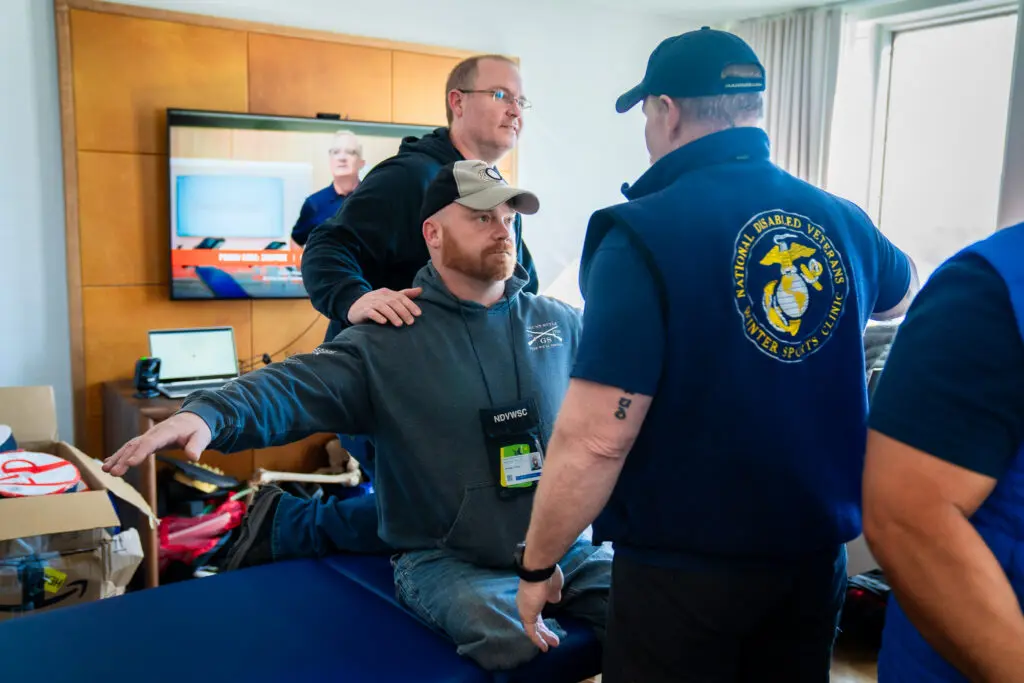
      Veterans with severe disabilities can participate in alpine skiing by using special equipment, like sit-skis, that are adapted to their individual needs. The equipment is specially tailored to improve comfort, provide postural support, and maximize safety for the Veterans.

      U.S. Marine Corps Veteran Joe Gibson gets fitted for his adaptive ski equipment at the National Disabled Veterans Winter Sports Clinic in the Seating, Prosthetic Limb and Boot Fit room.
      U.S. Marine Corps Veteran Joe Gibson gets fitted for his adaptive ski equipment at the National Disabled Veterans Winter Sports Clinic in the Seating, Prosthetic Limb and Boot Fit room.

      While Gibson has some familiarity with winter conditions, he was quick to point out the difference. Back home, ski runs are modest in size, with vertical drops ranging roughly 200 to 300 feet. In Colorado, the terrain presents an entirely new level of scale and excitement.

      In addition to skiing, Gibson is also looking forward to trying fly fishing, another outdoor activity he regularly enjoys.

      Though the Colorado mountain may be unfamiliar, Gibson isn’t going in alone. He’s been paired with a coach, Nicole Fear, who he’s worked with during previous ski events, and he expressed appreciation for her continued support.

      “Thank you for all the help, it means a lot,” Gibson said.

      With a positive outlook and a willingness to try something new, Gibson is ready to make the most of his first Winter Sports Clinic, one mountain at a time.

      Veterans Stories - Downed pilot’s mission to uplift fellow Veterans

      April 5, 2026

      Downed pilot’s mission to uplift fellow Veterans

      Posted By: Connie Powell

      It began with a shudder.

      June 12, 2004. The sky over Taji, Iraq, shimmers in the heat as U.S. Army Chief Warrant Officer 4 Brent South, strapped in the seat of a Kiowa Warrior OH-58D helicopter, scans the terrain below. His breath catches as he spies soldiers forced to their knees in the dirt – the unmistakable posture of execution. As South, and the pilot of his companion helicopter, cut across the sky their shadows slice the ground, causing the would-be executioners to flee.

      But South’s mission wasn’t over – he returned to refuel fast, too fast. A four-vehicle convoy had formed and he pushed to intercept. No time for delay. No time to complete an assessment of the fuel. A costly mistake.

      On his return, the engine sputtered. Alarms wailed. In the next instant, there was a sudden loss of power and a breathtaking drop. Metal screamed, rotors shattered, and the world spun violently.   As reality collapsed into nothing, South’s last view was an upside-down horizon, and water all around him.

      He woke up in the Combat Army Surgical Hospital in Baghdad. Groggy and disoriented, the first thing he heard was a British voice asking him how he ended up there. As South shared his story, the man began sobbing. By a twist of fate, South had been placed in a hospital bed next to one of the men kneeling in the desert. A man who had been seconds from death.   

      South had sustained extensive injuries.  A traumatic brain injury. Thirteen surgeries followed. Physical therapy. Chiropractic care. Cognitive behavioral therapy. EMDR. ART. Each step forward came with pain and the weight of memory. He had spent a lifetime running toward danger, now he was faced with the aftermath.

      He had enlisted in 1989, beginning his career in the 1st Ranger Battalion. From there he rose through the ranks, becoming a warrant officer and eventually a helicopter pilot. Eventually becoming an experimental test pilot and then an instructor. His deployment theaters spanned Bosnia, Iraq, and Afghanistan.

      Adjusting to his “new normal” did not come easy. Years of service had taught him to operate in chaos, but not necessarily how to sit with an invisible weight.

      It wasn’t until 2015 that he attended his first WSC with the Tampa VA Health Care System. The first year he kept to himself. But something shifted the second year.  Maybe it was an awareness of the quiet resilience of the other Veterans. Or maybe it was the realization that healing wasn’t meant to be done alone.  He started showing up.

      And that became his message to other Veterans. Get out there and share your experience, because, as he tells people, “You can’t help everyone, but everyone can help someone.”

      Today, South is an advocate. He speaks publicly, not for recognition, but for understanding. He wants civilians to grasp, if even in part, what Veterans have carried. The decisions made in seconds, the consequences that last decades. Most importantly, he wants them to know something else: their support matters.

      That when they donate to organizations supporting Veterans, they are not giving to a concept, they are investing in recovery.

      Brent South survived a crash that destroyed a helicopter, and nearly took his life.  But that isn’t what defines him – it’s the life that he built afterward and his commitment to making sure no Veteran has to navigate the aftermath of trauma alone.