Veterans Stories - Caregivers Find Support and Connection at Winter Sports Clinic
April 5, 2025

Caregivers Find Support and Connection at Winter Sports Clinic

Posted By: Web Admin
Winter Sports Clinic

Office of Integrated Veterans Care Communications Director 

At this year’s National Disabled Veterans Winter Sports Clinic, a new initiative is shining a long-overdue spotlight on a group often overlooked: caregivers. For the first time, the clinic launched a dedicated caregiver support program to offer connection, education, and emotional support to those who stand beside disabled veterans on their recovery journey. 

VA Caregiver Support Coordinator Grace Danborn, of the VA Eastern Colorado Health Care System, helped organize the WSC caregiver support, along with her co-worker Brenda Gust, emphasized the importance of the new initiative. 

“It’s good for caregivers to know you aren’t alone with your emotions and thoughts,” she said. “There are resources to share. The more that you know, the better off you are.” 

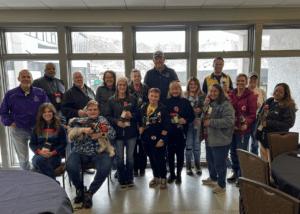
A joint effort of VA and DAV, the goal for Winter Sports Clinic caregivers is to create a space where they can connect, be introduced to resources and practical advice and support one another through acknowledging challenges, anticipating needs, and problem-solving together. 

Gust echoed Danborn’s sentiments. “There’s a lot of invisibility in being a caregiver,” she said. “We want caregivers to be seen, appreciated, and to know they’re not alone. There’s nothing more powerful than being surrounded by peers—best practices can be shared and stories can inspire.” Gust also said that, since this was the first year for the program at WSC they were hoping to hear directly from caregivers about what they need and would like to see in future years. 

At one listening session, a caregiver shared how powerful it was to be able to talk to other spouses and parents. “From a mental health perspective, just knowing I’m not alone in this journey is so helpful,” she said. “I had no idea how integral I was to my Veteran’s recovery.” 

Stacy Greathouse, whose husband, Adam, is an Army Veteran, reflected on how much things have changed since her husband became disabled. 

“Back then I was just trying to gather resources,” she said. “Now we can help each other. We all want the person I love to thrive past their limits—and Winter Sports Clinic, through recreational therapy, helps with that. For me, this group fills a void and builds connections.”

Ione McCarthy said connecting with the group opened her eyes. Her husband, Jay, a Navy Veteran, was recently diagnosed with Parkinson’s, so she is new to caregiving and grateful for the guidance. “I want to understand what my role is going to be,” she said. “I know my journey is just beginning and I want to learn from others.” 

McCarthy was grateful to have connected with Colleen Costa, whose husband, Andrew, was diagnosed with dementia five years previously. “This is the first time in a long time I’ve felt appreciated,” Costa said. “The emotional toll is real.” 

DAV National Voluntary Services Director John Kleindienst acknowledged that while introducing the caregiver support program was a step forward, there’s still work to be done.

“This support at Winter Sports Clinic is long overdue. The sacrifices of our Veterans are also the sacrifices of their caregivers. Their stories matter. We need to support them, give back, and create bigger events with greater visibility. There are 43 million caregivers in this country—we want them all to know: you are seen and your voice matters.”
Veterans Stories - U.S. Army Veteran losing his vision joins a special branch—Veterans with disabilities

April 4, 2025

U.S. Army Veteran losing his vision joins a special branch—Veterans with disabilities

Posted By: Web Admin
Winter Sports Clinic

Curtis Jemison always considered himself an “A-1 driver.” But then came a string of accidents – a parking lot scrape, a crushed orange cone, a minor fender bender.  However, when Jemison ripped off his driver side mirror, the U.S. Army Veteran had to face a hard truth.

“I just couldn’t believe it,” Jemison said. “I was losing my eyesight.”

An ophthalmologist at the John D. Dingle VA Clinic in Detroit confirmed the diagnosis: Stargadt disease, a rare form of macular degeneration with no cure.

“You never know what you have until you lose it. I guess I was taking my eyesight for granted.”

A shifting world to navigate

Losing his independence hit hard; he had always loved being behind the wheel, but now his new truck sat idle.

“I was pissed at the world, you know what I mean?” he said. “Why me? So, I was really pissed.” He remembered saying, “Y’all can’t do nothing for me. You can’t fix my sight. You can’t give it back to me. What are you going to do for me? Nothing.”

Jemison’s VA care team encouraged him to get support from the low vision program. He refused. But eventually, one appointment changed everything.

Starting over

At the John D. Dingell VA Medical Center’s low vision clinic, staff showed Jemison a different path. The clinic provides advanced vision care and blind rehabilitation services to help Veterans live independently.

 “They will help you do everything from A to Z. They make you so comfortable,” he said, adding that when they couldn’t do more for him, they offered an alternative, asking if he wanted to go to a blind rehab center.

He said yes.

At the Hines VA Blind Rehabilitation Center outside Chicago, Jemison trained alongside 25 other Veterans who understood his grief and frustration. From 8 to 4, they learned life skills – navigating kitchens, playing puzzles, learning piano and guitar, and other skills like woodworking. He even learned how to walk confidently with a cane. Technology is critical with vision loss and Jemison learned how to adapt an iPhone to remain informed and connected.

Returning home to Detroit he had the tools and confidence – but the loss still stung.  Each day brought new challenges.

“Somebody has to take me here or there,” Jemison said. “Sometimes I feel like, ‘Damn, I’m mad. I’m mad about that.’ Maybe I’ll just sneak in my truck and just go to the store. But I don’t do it.

From Motion to Motivation

Jemison joined VA’s recreation therapy program and his recreational therapist, Maureen, introduced a new goal: The 2025 Winter Sports Clinic. Training began, and alongside fellow Veterans, he joined prep lessons to try adaptive skiing at the Winter Sports Clinic.

Camaraderie at the Winter Sports Clinic

Fourteen months after his diagnosis, Jemison arrived in Snowmass, Colorado, surrounded by more than 350 other Veterans with disabilities.

At lunch, Jemison sits next to his fellow Veterans from across the country, debating which branch is best and share the stories of how they arrived at the mountain.

“It’s just been a blessing to be around so many wonderful personnel and disabled Veterans,” Jemison said. “There are so many wheelchair Veterans here with good attitudes, motivation and character—they encourage me to keep going. Some Winter Sport Clinic Vets are blind. Others have limbs missing.”

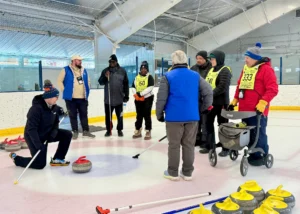
From adaptive skiing and scuba diving, rock climbing, curling, flyfishing, yoga and more, the clinic opened up a new world.

“You can feel like you’re outside when you lose your eyesight. But when you’re around all these Vets, the camaraderie, the support system that they give us here… I see Veterans of all disabilities participate in these different events and I go, ‘Oh, wow, I know I could do this then.’ They give me that motivation. Everybody here recognizes everybody in a good way. It’s nothing but respect and love.”

At the Winter Sports Clinic, he will try scuba diving, curling and skiing. He traveled in a gondola to take in the sites above Aspen.

“The snow caps of Colorado went way up 11,000 feet. It was so amazing that we made snow angels up there. It was just beautiful.”

Jemison said he talked to a Veteran who had been attending the clinic for 20 years, telling him it was “his medication.”  “At one time, I thought I would do nothing else in life but just sit on the couch. This is a whole lot more than just sitting on the couch!”

Looking Ahead

Only three days into his first Winter Sports Clinic, Jemison is already talking about next year.

Just like back home in Detroit, he navigates with his cane. No one knows when his sight will be fully gone, but his outlook has changed.

“I am still pissed, but now I’m pissed in a good way,” he said. “I turn that negative energy into positive, and I go to the VA, talk to the counselors and go to the gym. I can participate with other Veterans and VA employees. I hear their stories about life and it really encourages me.”

He is determined to return to Snowmass for the 2026 Winter Sports Clinic.

“We are a special branch of people—disabled Veterans. If you are disabled, don’t think you can’t do it, because you can,” he said. “I’ll be back again next year on the 40th. This is a great program, and I see why they’ve had it for 39 years.”

Veterans Stories - Learning and thriving: Disabled Navy Veteran discovers purpose through adaptive sports

Learning and thriving: Disabled Navy Veteran discovers purpose through adaptive sports

Posted By: Web Admin
Allison Travis

Content warning: This story contains graphic descriptions of physical assault that may be triggering for some readers.

Allison Travis watched on television as people jumped out of the World Trade Center on 9/11, and she immediately had an idea about what was coming.

“So the next day, I went to the Navy and Marine Corps reserve center and volunteered because I knew we were going to war,” she said.

Travis, who is named after her uncle, Navy Capt. Michael Allison Patten, was 48 and a board-certified psychiatric nurse practitioner in Texas when she signed up to serve. Eighteen months later, she was commissioned as a lieutenant in the Navy Reserve and deployed overseas with Fleet Hospital Dallas.

“I celebrated my 50th birthday in Kuwait,” she said.

While Travis was there working as the mental health triage officer for the troop medical clinic at Camp Arifjan, her life changed.

Her commanding officer, a doctor within the unit, got a call from the military police about a soldier who had abandoned his post and was found wandering by himself in the desert talking to his weapon. In detainment, he was refusing to eat and continued talking to people who weren’t there.

“In my experience, I knew this was most likely first [episode] schizophrenia,” Travis said.

He needed treatment to break through psychosis, so Travis recommended a cocktail injection that would address the symptoms. Her commanding officer disagreed, instead ordering her to administer treatment in dissolvable pill form.

As Travis went to put the pill in his mouth, the soldier—who she thought was handcuffed and shackled—immediately struck her in the right eye with his fist.

The force behind the attack sent Travis reeling backward. Her head slammed into the wall behind her, knocking her unconscious. She woke up to MPs tackling her patient to subdue him.

In that moment, Travis’ career as a nurse was over. She’d sustained a traumatic brain injury with a loss of cognitive function. Ever since the assault, she’s had migraines and issues with her memory and balance.

She also experiences post-traumatic stress. Ten years ago, she couldn’t even talk about the incident but has since gone through extensive therapy. She credits her doctors and treatment team at the Atlanta VA Medical Center for helping her get to a place where she can open up about the experience.

There was still a missing piece, though. Athletic and outgoing before her injuries, Travis was withdrawn and reclusive, especially after the COVID-19 pandemic. Her brother, whom she now lives with in the Atlanta suburbs, suggested she try playing tennis at their neighborhood courts as a way to get out a little more. It helped; she found tennis to be a therapeutic outlet.

Then she saw an email from the Department of Veterans Affairs advertising adaptive sports clinics through its Sports4Vets program, which she and her VA doctors hadn’t heard of before. Intrigued, she applied and was invited to the 2024 National Veterans Summer Sports Clinic in San Diego, where at 69 years old, she learned to surf.

“It was just an experience I’ll never forget,” Travis said. “For the first time in my life, I met others who had TBI and PTSD, and through it, I found a community that could understand me.”

While in San Diego, she learned about the National Disabled Veterans Winter Sports Clinic and applied.

“I thought, ‘Well, if I can learn to surf at 69, I can learn to ski at age 70,” she said. “So my goal is to not only learn to ski but thrive. Whatever they want to teach me, I’m there to learn and thrive.”

She hopes to apply what she learned while attending the summer clinic to what she’s going to experience in Snowmass Village, Colorado.

“If you don’t work the program, the program won’t work for you,” she said. “These are outstanding programs, but you’ve got to want to be there and you’ve got to be committed and you’ve got to have goals. My goal was to learn as much as I could and hopefully come out of it a stronger, healthier person.”

She did, and now Travis has a renewed outlook.

Veterans Stories - Casting Hope: Volunteers Bring Fly Fishing to Veterans

Casting Hope: Volunteers Bring Fly Fishing to Veterans

Posted By: Web Admin
John Harcourt

Communications Director, Office of Integrated Veteran Care

Each year the National Disabled Veterans Winter Sports Clinic proves that the power of the outdoors – combined with dedicated volunteers – makes a lasting impact on the lives of Veterans with disabilities.

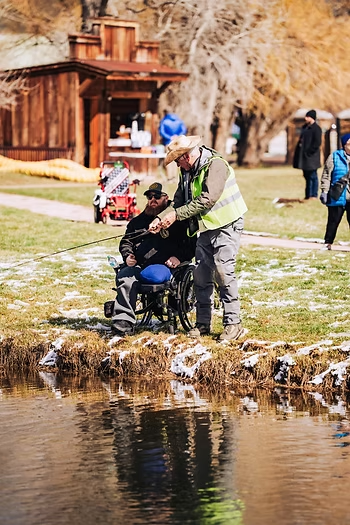
Thanks to support from the Aspen Elks Lodge 224, Roaring Fork Valley Fly Fishing Club, Half-Az Ranch, Colorado Parks and Wildlife and other local volunteers, Veterans get to experience the joys of fly fishing – many for the first time.

Among those volunteers is the Harcourt Fly Fishing 3D team, a family of professional fishing guides spanning three generations who are committed to introducing Veterans with disabilities to the sport.

Family patriarch John Harcourt introduced his son, Dustin, and grandson, Drake, to fly fishing as children. In fact, John said both learned to tie flies before they could read, a foundation that helped Dustin earn the title of “Best Guide” in Elevation Outdoor Magazine’s “Best of the Rockies” awards, which covers six states. His skills have attracted high profile clients, including former President George W. Bush and General Colin Powell.

While John has met many Veterans during his years of volunteering, one stands out. The Veteran was legally blind, with a small amount of vision left. However, he knew he would soon lose his sight completely. He told John that he was determined to catch a fish on the fly. As lunchtime rolled around, and still luck, John asked him if he wanted to take a break. The Veteran shook his head, he was on a mission. Then finally, he hooked his fish, caught on his own. At the end of the day, the Veteran turned to John and said, “That was the best day of my life.”  John was stunned. “I thought, how could that be? A single fish? It almost brought me to tears.”

This week, however, it was Drake who made a splash when a Veteran he was assisting landed a monster 21-inch trout – an undeniable highlight of the day.

After a successful few hours of reeling in trout, Veterans are treated to a spread that includes hot dogs, bratwurst, hamburgers and fresh trout caught the same day – grilled and served by the local Elks.

“I get more out of helping the Veterans than what I give. It’s an honor to be able to serve them,” said Jane Carey, as she mixed a huge bowl of salad. She has been volunteering at the event for the past 10 years.

Gretchen Straub, who has been involved for eight years, reflected on the experience, “Being here makes me grateful for my life,” she said as she bustled behind the scenes. “The Veterans keep things in perspective when I see their strength.”

Colorado Parks and Wildlife also played a key role in supporting the event by donating spinning rods to ensure every Veteran has access to the right equipment. Their continued support is one puzzle piece to making the event possible each year.

For the Veterans who participate, it’s more than just a fishing trip – it’s a chance to reconnect with nature, experience camaraderie and find peace on the water. And for the volunteers, it’s a powerful reminder that small acts of kindness make a big difference in the life of a Veteran.

Veterans Stories - Chronic pain melts away on the slopes

April 3, 2025

Chronic pain melts away on the slopes

Posted By: Web Admin
Charles Hastings

Driven by a deep sense of patriotism and a desire to serve his country, Charles Hastings enlisted in the U.S. Air Force in 1970.

He sought a path where he could contribute to his country and also acquire valuable, transferrable skills. The Air Force provided it.

Hastings served for 20 years as a water and fuel systems maintenance specialist. His service took him all over the U.S. and abroad, including duty stations in Texas, Massachusetts, Alaska, Utah and Germany.

But early in his military career, Hastings fell through some scaffolding about 25 feet while working and sustained a devasting injury to his right leg.

“I ended up fracturing my fibula and tibia, and tore multiple ligaments in my knee including the anterior cruciate ligament,” Hastings said. “I was just fortunate that I didn’t sustain anything more significant than I did falling from that height, but it led to a long, grueling rehabilitation process.”

Knee surgeries in the 1970s were considered career-ending, but Hastings recovered enough to continue his service. However, his right knee was never the same and eventually led to recurrent back issues.

Over the years, Hastings dealt with chronic pain stemming from that fall, which has dramatically intensified over time. He’s has had multiple knee and back surgeries and had a spinal cord stimulator installed in 2020 to help relieve some of the pain.

During Hastings’ rehabilitation from that back surgery, his physical therapist at the VA medical center in Salt Lake City mentioned the National Disabled Veterans Winter Sports Clinic and invited him to participate.

“She thought the winter sports clinic would be a great way to help with my balance, improve on different aspects of my physical therapy and provide me with a more positive outlook on life,” Hastings said. “The constant struggle of chronic pain had become overwhelming and started to have a negative impact on me mentally.”

Hastings attended his first winter sports clinic in 2023 with his wife, Mimmie, and is returning this year with his youngest son, Joe, serving as his caregiver.

“I get such a thrill going up the gondola and riding around the snow-capped mountains either on sit skis or a snowmobile,” Hastings said. “As a DAV life member, I think events like this are an incredible experience to intermingle with other Veterans, learn their stories and participate in something that can be life-changing. I’m just so blessed and thankful for this opportunity.”

Caregivers are unsung heroes, and their contributions enhance Veterans’ quality of life. Learn how DAV Caregivers Support can help you care for your loved one when you return home after the clinic: davcaregivers.org.

Veterans Stories - Winter Sports Clinic 2025: Boundless Possibilities

April 2, 2025

Winter Sports Clinic 2025: Boundless Possibilities

Posted By: Web Admin
Winter Sports Clinic

The Journey Begins

Each spring for the past 39 years, Veterans and their caregivers make their way to Snowmass, Colorado. Their destination: the National Disabled Veterans Winter Sports Clinic, aka Winter Sports Clinic. While their life experiences and injuries are different – traumatic brain injuries (TBIs), spinal cord injuries, visual impairments, amputations and other severe disabilities – they share a common purpose: to embrace adventure, push past limits and discover what’s possible.

Power that Unites

Veteran Scott Henderson, who served in the Army and National Guard Veteran, is one of the many Veterans who will experience “miracles on the mountain” for the first time this week.

“We have all suffered in some way, shape or form. It is an honor and gift to be able to do this,” he said.  Henderson, from Palo Alto VA Medical Center, is looking forward to being part of a new community to find commonalities that  unite him with fellow Veterans

New Possibilities

Returning for her second year, Navy Veteran Rachel Rice,  from the Martinsburg VA Medical Center, eagerly anticipates the thrill of sit skiing.  In September 2019, while training for a marathon, her legs started to “fall out from her.” By December, she could barely walk and would be diagnosed with a spinal cord illness.

For Rice, skiing is a thrill. “It’s like having your own personal roller coaster. It’s freeing… you can go and do not feel held back.”

For Army Veteran Curtis Jemison, who began losing his vision in 2024 due to macular degeneration, this week is about stepping into the unknown.  He has been training with Detroit’s John D. Dingle VA Medical Center for the past months, determined to try skiing, scuba diving “and everything they have to experience here.”

“I think I’m in bad shape, and there are some worse off than me,” Jemison said. “They are out here, pushing themselves and they motivate me to push on.”

Army Veteran Jason Dills, from the VA Augusta Health Care System, returns for a second year, eager to ski again.

“It’s exhilarating! I never did this before I was injured,” said Dills. “It opened my eyes to a bunch of possibilities—I didn’t know any of this is possible!” Since attending his first Winter Sports Clinic, he competed at the National Veterans Wheelchair Games.

His advice for all the first-time participants, “Relax and take it all in—enjoy it. You don’t know until you try—you don’t know what’s attainable until you go for it.”

To learn more about the National Disabled Veterans Winter Sports Clinic, visit https://www.wintersportsclinic.org.

Katie Beall is the Newsroom Chief for VISN 19’s Creative Task Force team. 

Veterans Stories - He stood up, steadied his feet and skied: freedom beyond limitations

He stood up, steadied his feet and skied: freedom beyond limitations

Posted By: Web Admin
Jorge Decastro-Cordeiro
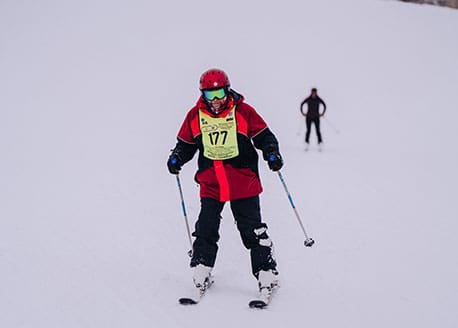
Jorge Decastro-Cordeiro downhill skis at the 2025 National Disabled Veterans Winter Sports Clinic.

Katie Beall is the Newsroom Chief for VISN 19’s Creative Task Force.

 U.S. Army Veteran Jorge Decastro-Cordeiro stared down the slopes of Snowmass in 2018 as a first-time participant at the National Disabled Veterans Winter Sports Clinic (Winter Sports Clinic). He hadn’t skied since he was stationed in Alaska almost twenty years earlier.  

An Airborne Ranger, Decastro-Cordeiro deployed multiple times to places like Iraq, Kosovo, the DMZ (demilitarized zone) in South Korea, Rwanda, Nigeria and Zaire over his 22 years of service.

In 2010, in Kirkuk, during his fourth combat tour to Iraq, his platoon was attacked on a bridge. His vehicle took the brunt of an IED blast. For at least seven minutes, he was unresponsive, waking to a medic asking, “Sergeant, are you okay?”

Left with a traumatic brain injury (TBI), he remained with his soldiers, receiving treatment on base. The injury triggered severe, chronic headaches and migraines.

Decastro-Cordeiro served six more years, enduring the daily impacts of his TBI and other service-related injuries. In 2016, he retired after 22 years of service, having earned the rank of Sergeant First Class

The start of a new beginning

Eight years after the IED attack, he arrived at his first Winter Sports Clinic. Decastro-Cordeiro was at the height of his struggles with chronic headaches, memory, orientation and balance issues.

“I was creating limitations in my mind,” he said, saying to himself, “You can’t do that.”

After retirement, he received care at VA Palo Alto Polytrauma Rehabilitation Center (PRC), one of five facilities nationwide providing intensive rehabilitative care to Veterans and servicemembers with severe injuries.

Encouraged to attend Winter Sports Clinic by the VA Palo Alto’s recreation therapy team, he made the choice to attend but he doubted his abilities.

His instructors reassured him, promising, “We will guide you.”

By race day, he advanced from using a slider (equivalent to a standard walker attached to skis) to skiing with instructors by his side. He lined up, determined to ski standing for the whole course.

The race began. He stood up, felt the pull of the mountain, steadied his feet in his boots and skied the entire course, his instructors by his side. At the bottom of the mountain, the swell of emotions from his accomplishment hit him and all three hugged in celebration.’

“I cried after the race because I am so grateful for the Winter Sports Clinic,” Decastro-Cordeiro said. “The Winter Sports Clinic changed my life. It provided me the strength and the motivation to continue moving forward.”

Finding the strength and support to heal

Now attending in 2025 for his sixth Winter Sports Clinic, he continues to push his boundaries.

Reflecting on 2018, he said, “I had so many limitations back then. Besides the TBI, I had other mental health difficulties. TBI and PTSD together are like a bomb. It can be very difficult.”

With his wife’s support, he sought treatment for PTSD.

“Brianda was the one person that made me come forward and look for help with PTSD. It was the best thing I did for myself in my life.”

While his injuries persist, he has learned how to navigate them.

“In the last six years, I lost eight friends to suicide—guys who were in the war with me. Guys who were there with me in very challenging situations. They survived the battlefield, and they died at home. I don’t want to just be a number” he said, of the battles he recognizes he doesn’t face alone. “I keep my motivation, my faith and continue to enjoy VA recreational therapy programs.”

Sharing the journey with other Veterans

VA’s Recreational Therapy program and Winter Sports Clinic continue to empower Decastro-Cordeiro. He now rock climbs, fishes, sails, cycles, scuba dives and more. He maintains strong connections with Veterans across the country, and they regularly do buddy checks on each other.

Gesturing to the slopes of Snowmass, he said: “This mountain can heal you. For Veterans who haven’t yet come, you can go further, be more independent and functional with whatever limitations you have.”

Living in Florida, Decastro-Cordeiro remains active with the VA West Palm Beach recreational therapy team. He believes every Veteran should experience the healing, movement and community possible in rec therapy.

“It changed my life in 2018 at my first Winter Sports Clinic. There is healing in sports. They showed me I could do it, and I did! Every year is an improvement, step by step.”

For Veterans considering attending the 40th Winter Sports Clinic in 2026, Decastro-Cordeiro stands by to welcome you: “If you’ve never been, please come and enjoy. You will learn how to overcome your limitations. You will be a new person when you leave this place.”

Veterans Stories - Trading gunfire for gliding on snow

Trading gunfire for gliding on snow

Posted By: Web Admin
Winter Sports Clinic

Imagine the thunder of gunfire replaced by the whisper of wind, the weight of a rifle traded for the exhilarating glide of skis. Bryan McCrickerd’s journey is a visceral testament to the human spirit.

Despite the wounds that scarred his active duty past, on the pristine slopes of the Colorado Rockies, he’s redefining his future with unbridled joy and the raw, liberating power of rediscovery.

A single devastating moment in the late 1980s transformed McCrickerd, a seasoned Army combat engineer bridge specialist, when a spinal cord injury abruptly ended his military career.

“My legs didn’t work right after that,” McCrickerd said. “And by 2012, my body said, ‘This is it.’”

But having been active in sports his entire life, he wasn’t going to sit around with nothing to do.

Needing something that wouldn’t hurt his back, McCrickerd started with archery. Next came a bike-riding clinic, and that’s where someone suggested he go skiing.

“Go skiing?” mused McCrickerd. “Me, a fat-ass who can’t stand up, going skiing?”

Despite his protests, he agreed to give it a try.

Even though he had previous skiing experience, McCrickerd was warned that relearning the sport would take time. But he astonished everyone by skiing solo, without tethers, a mere eight days into the process.

This is McCrickerd’s second trip to the National Disabled Veterans Winter Sports Clinic, co-presented by DAV and the Department of Veterans Affairs. He believes adaptive snow skiing is far more than just beneficial for wounded veterans—it’s essential for their well-being. He emphasizes the experience of regaining physical power; enjoying the thrill of skiing; and building strong bonds with fellow veterans, encouraging them to overcome their limitations.

He candidly views the sport as a critical factor in survival, not merely a recreational activity.

 “I wish all vets in my condition would try this because it would cut down on suicide,” McCrickerd said.

McCrickerd’s impact extends far beyond his own journey. He recounts numerous encounters with fellow veterans who credit him with saving their lives by introducing them to adaptive sports.

“It’s an escape, a lifeline,” he explained. “For many of us, traditional work is no longer an option. Life can shrink to a TV screen.”

McCrickerd’s message to other injured veterans is clear: “Get out there. Start something.”

At the clinic, McCrickerd’s focused determination is palpable. He’s not just participating; he’s strategizing and refining his skills for the ultimate challenge. With a clear vision of conquering the summit of Vermont’s Mount Snow next year, he’s using every moment on the Colorado slopes to master the nuances of speed and terrain.

For McCrickerd, this clinic is a stepping stone, a crucial phase in his relentless pursuit of pushing his limits and claiming the mountain as his own.

Veterans Stories - Breaking Barriers: Women in Prosthetics Transforming Lives

Breaking Barriers: Women in Prosthetics Transforming Lives

Posted By: Web Admin
Winter Sports Clinic

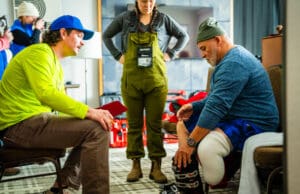
Each year an essential first stop for Veterans skiing in adaptive equipment at the National Disabled Veterans Winter Sports Clinic is the Seating, Prosthetic Limb and Boot Fit room. It’s here that a team of specialists ensure each Veteran is individually fitted for their adaptive equipment. The team plays a vital role in maximizing comfort, stability and performance – whether it’s adjusting a prosthetic limb, fine-tuning a sit-ski for better comfort or customizing boots to prevent pressure points.

Last year, Rebecca Fagan, a Certified Prosthetist and Orthotist (CPO) from the Syracuse New York Veteran Affairs Medical Center (VAMC), was the only female prosthetist at the event, held each year in Snowmass, Co. This year, two more women joined the ranks, and she is thrilled to see more diversity.

“It’s exciting to see more women in this role,” Fagan said. “Last year, I was the only one here, and now there are three of us. It shows that change is happening, and that’s inspiring.” Fagan’s passion for prosthetics was shaped by her upbringing—her father was a 20-year military veteran, and her mother worked in physical therapy. “Helping people regain mobility was something I grew up around. Seeing my parents’ dedication to service and rehabilitation made me want to be part of this field,” she said.

In a profession historically dominated by men, a growing number of women are making their mark in prosthetics combining science, craftsmanship, compassion and power equipment to change lives. CPOs play a vital role to help patients regain and improve mobility and function by designing, fabricating, and fitting prosthetics for those who lost limbs to injury, illness, or congenital conditions.

The work of a prosthetist is both highly technical and deeply personal. It begins with understanding each patient’s unique needs, lifestyle and goals. The work is physically demanding—casting a limb, shaping materials, and fitting prosthetics require strength, precision and endurance. It is an art as much as a science, where skillful hands craft devices that become integral parts of their users’ lives.

The physical process of creating a prosthetic begins with an intimate and hands-on step: casting the residual limb. This requires the prosthetist to create plaster mold, ensuring every detail of the limb is captured to achieve a perfect fit. Then comes the modification phase, where the mold is refined, sometimes requiring long hours of sanding and shaping. The socket, which connects the prosthetic to the limb, must be durable yet comfortable—a balance that takes years to master. Finally, the prosthetic is assembled, using cutting-edge technology and durable materials, to create a limb that restores mobility and independence.

CPO Tessa Braun, from the Seattle VAMC, shares her excitement about following Veterans throughout their journey. “It’s incredible to be there from the beginning, helping them get fitted for a prosthetic, evaluating their progress, and seeing them regain mobility. I get to witness firsthand the resilience of those who have served.”

Braun feels the field has traditionally appeared male-dominated, partly because of the heavy-duty tools. “There’s a lot of grinding, big band saws, and other machinery,” she said.

Looking toward the future of prosthetics, Braun is optimistic. “I see prosthetics becoming more efficient and 3-D printing and scanning are already being used to create customized parts for better fit and safety.”

Hailing from the Minneapolis VAMC, CPO Emily Zoltai shares a deep passion for adaptive sports and the power of providing resources to individuals with disabilities. “I love adaptive sports—I love seeing what people can do if you give them the resources. This world is not made for people who are not able-bodied, so being able to adapt is impactful.”

Zoltai is also inspired by the collaboration between prosthetics research in universities and VA, which helps push the field forward. Like her colleagues, she acknowledges the industry’s male dominance. “It’s seen as a field where you need to be strong because of the tools we use, but that doesn’t mean women can’t excel in it,” she said.

Women in prosthetics are not just creating limbs; they are breaking barriers by proving that skill, dedication, and heart—not gender—define excellence in prosthetic care.

From the workshop to the slopes of the Snowmass, these women are changing lives—one step at a time.

Veterans Stories - How adaptive sports opened up disabled Navy veteran’s world

April 1, 2025

How adaptive sports opened up disabled Navy veteran’s world

Posted By: Web Admin
Devora Exline
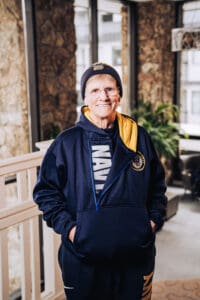
Former Navy hospital corpsman Devora Exline has attended the National Disabled Veterans Winter Sports Clinic since 2013. Over her nearly 26-year military career, she experienced traumatic brain and other debilitating injuries. Exline said adaptive sports have changed her perspective and inspired her to become a coach.

For Devora Exline, this year’s National Disabled Veterans Winter Sports Clinic in Snowmass, Colorado, could mark a full-circle moment. 

Exline started attending the clinic in 2013. During those first couple of years, she enjoyed skiing down the mountainside in a standing position despite her physical limitations.  

“And then, unfortunately, my military injuries caught up with me,” she said.

Exline served as a Navy hospital corpsman from 1985 to 2010, deploying to Kuwait during the Persian Gulf War in the early 1990s and again in 2003. Over her nearly 26-year career, she sustained multiple traumatic brain injuries, including one from a detonated improvised explosive device, among other debilitating injuries.  

After the military, Exline struggled to readjust to civilian life as she navigated chronic pain and post-traumatic stress. She attended nursing school, where a fellow student who had served in the Marines recognized that Exline needed help and took her to the Vet Center. That began Exline’s journey of recovery, both physically and mentally, from the traumas of her military service.   

In 2012, she attended a Department of Veterans Affairs summer sports clinic in San Diego. The following year, she took the leap into winter sports.

When Exline was told she would no longer be able to ski standing up, she was “pretty devastated.”

“Because it’s basically saying, ‘Yeah, I can’t do what normal people do,’” she said.

But when her longtime winter sports clinic coach, David Schadle, encouraged Exline to adapt and try sit-skiing, her concepts of “normal” and “disability” shifted.

“It was great to have a coach that turned all that negative hogwash that was in my head into a positive and into having a really good time on the mountain and each year being able to advance and get better,” she said.

Exline said the positive influence of clinic coaches has been life-changing.

“One of the things that adaptive sports has really helped me with is to get back my positiveness and turning anything negative into a positive,” she said. “What do they say, ‘miracles on a mountainside’? I think that’s been the miracle for me.”

Exline has been so inspired by adaptive sports that she’s in the process of becoming a certified adaptive sports coach and has already started coaching others in fly-fishing and kayaking.

“Adaptive sports has really opened up my world,” she said.

Now, roughly 10 years after what she first saw as a setback on the slopes, Exline has been cleared to try skiing while standing again.

“It’s like coming full circle,” she said, “and I am really excited.”